


Theme Park Manager
4.5296.00 Reviews
App Specs
- Version
- 16.3.0
- Updated On
- License
- Free
- Downloads
- 1,000,000+
- Developer
- Supercent, Inc.
- Categories
- Simulation
- Platform
- Android
Screenshots
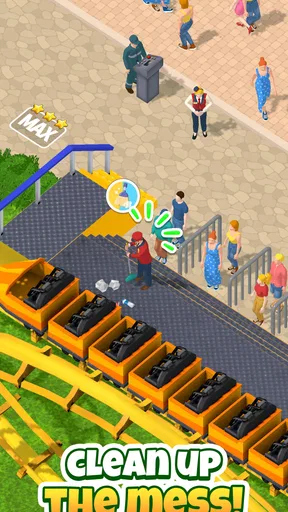
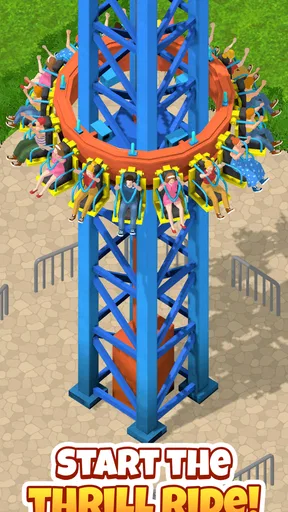
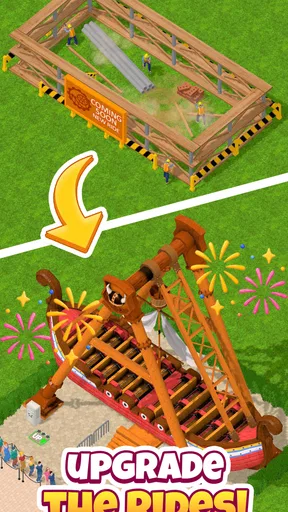
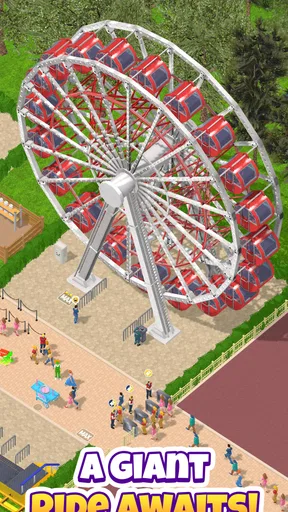
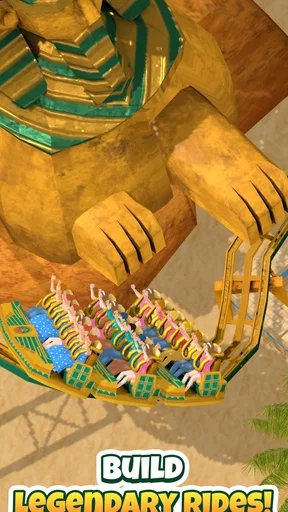

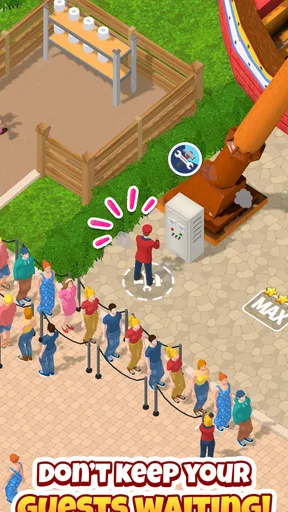
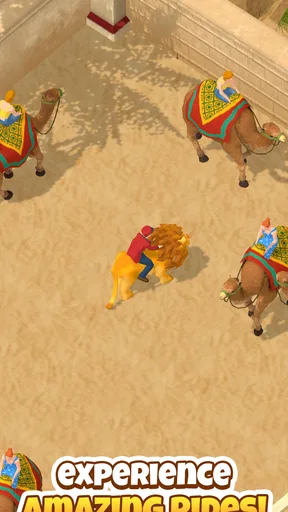
 Analysis by AppCompare
I look for two things in a theme-park simulator: room to make something that feels like my own, and enough management decisions to give that creativity a purpose. Theme Park Manager aims for both, mixing ride design with the day-to-day work of keeping a park running. It suits relaxed sessions, but there is more to consider than simply placing attractions and watching visitors arrive.
That mix is the game’s main appeal—and also what determines whether it is right for you. If you enjoy adjusting a plan as new problems appear, the management side can make building more satisfying. If you mainly want a free-form coaster editor with no business decisions, the operational tasks may feel like a detour.
What spending context tells you
This is a free simulation game from Supercent, Inc., with in-app purchases priced from $0.99 to $99.99 per item. That range is worth knowing before you start, but it does not, by itself, tell me what any particular purchase contains or whether it is needed to progress. I would treat optional spending cautiously: play first, see where you actually feel friction, and only then decide whether anything offered is useful to you.
The game is rated Everyone, and its average rating is 4.6 from around 5,000 ratings. It has over 100,000 installs. Those figures suggest that plenty of players have tried it and that the overall response is positive, though neither popularity nor a strong average rating can tell you whether its pace and management style will suit your taste.
How I’d fit it into a day
A theme-park game can be tempting to leave running while you do something else, but I find it more rewarding when I approach it with a small goal. On a short break, I might check the park, address one issue, and leave the bigger redesign for later. When I have more time, I can focus on a coaster layout or reconsider how the attractions and business choices work together. This makes the game easier to enjoy in separate sessions rather than treating every visit as a demand to overhaul the whole park.
A practical tip is to avoid changing several things at once when you are trying to understand a result. If visitor satisfaction or finances seem off, adjust one decision and see how the park responds before making another. That approach is useful in management simulations because it helps you learn which choices are doing the work, instead of guessing after a flurry of changes.
Who will enjoy the trade-offs
I’d recommend it most to players who like alternating between creative construction and light business-minded decisions. It can be a good fit if you enjoy making a coaster, then thinking about the wider park rather than treating that ride as the whole game. The familiar amusement-park setting also makes its central idea easy to grasp, even if you do not usually play management games.
Worth Reading Before You Choose

Flipboard Shows What News Apps Must Do Beyond the Feed

Switching to Android Auto Means Rethinking Your Driving Routine

Google Calendar Makes a Crowded Week Easier to Manage

Ludo King Makes the Most of the Minutes Between Plans

Baby Panda World Brings Quick Play to Modern Phones, but Its Game Library Feels Busy

ESPN’s Live Game View Makes Following Close Games Easier
On the other hand, players who want a highly technical construction tool may prefer a game built around detailed coaster engineering. People who dislike juggling operational choices may also find a pure building sandbox more relaxing. The choice comes down to whether you see park management as part of the fantasy or as work standing between you and the rides.
Fairness, pace, and what remains unclear
Because purchases are available at a wide range of prices, I would not assume that spending is either essential or irrelevant. The useful question is whether the game remains enjoyable at your own pace without buying anything. Try its core loop before paying, and do not treat a large purchase as a shortcut unless the game clearly explains what you receive and you are comfortable with the trade-off.
For competitive fairness, I would separate a personal park-building experience from a game where players directly compete. I can’t responsibly claim that purchases affect rankings, provide an advantage over other players, or have no effect at all without clear details. If competition matters to you, check how any competitive mode works before investing time or money; if your goal is simply to shape a park, focus on whether the creative and management loop is satisfying on its own.
The release date is June 18, 2025, and the current version is 9.1.0, with Android 6.0 as the minimum operating-system requirement. I would still check that your device supports it before downloading. The game is free to start, but the listed purchase range makes it sensible to keep an eye on spending, particularly if a child will be playing.
One thing I would want to establish early is what progress depends on: patient play, particular management choices, or optional purchases. I would also pay attention to whether the game clearly explains what an offer contains before confirming it. Those are practical checks rather than reasons to assume a problem; they help you decide whether the game’s pace feels fair to you.
A Rollercoaster of Features
First off, the sheer variety in Theme Park Manager is something to behold. You start with a modest plot of land and a few basic rides, and from there, the sky’s the limit. The app offers a wide selection of rides, from classic merry-go-rounds to adrenaline-pumping roller coasters. The customization options are pretty impressive too. You can tweak everything from the ride speed to the color scheme, making each attraction uniquely yours.
One of my favorite features is the ability to design your own roller coasters. It’s a bit like being a kid again, letting your imagination run wild with loops, drops, and twists. And trust me, seeing your creation come to life and thrill your virtual guests is immensely satisfying.
Management Mode: More Than Just Fun
This app isn't just about building rides. You’ve got to manage the park’s finances, staff, and even guest satisfaction. It’s a balancing act that makes the game both challenging and rewarding. You’ll hire and train staff, set ticket prices, and strategize marketing campaigns to attract more visitors. It’s like running a business, and it can be surprisingly engaging.
One thing that really stands out is the attention to detail. The app simulates various aspects of park management, like weather changes affecting ride popularity and the need for regular maintenance. You even have to deal with the occasional breakdown or guest complaint. It makes the experience feel authentic and keeps you on your toes.
Those systems give me a useful way to choose what to work on during a session. If a ride is not performing as expected, I can consider its design alongside practical upkeep and the wider visitor experience instead of immediately assuming that building another attraction is the answer. When several demands compete for attention, tackling the most disruptive issue first is a sensible habit; it keeps a small maintenance concern from becoming background noise while I spend time on decoration.
There is also a trade-off in how much I would optimize. Setting prices and promoting the park can be satisfying when I want to think like an operator, but constantly chasing the best outcome would take some of the playfulness out of the design side for me. I prefer to treat management choices as a way to support the park I want to build, not as a reason to make every decision purely for efficiency.
Visuals and Sound: A Feast for the Senses
Visually, Theme Park Manager doesn’t disappoint. The graphics are vibrant and detailed, bringing your park to life in a way that’s both charming and immersive. The animations are smooth, and watching the rides in action is a treat. The sound design complements the visuals perfectly, with the joyful screams of guests and the clatter of roller coasters enhancing the experience.
The user interface is intuitive and user-friendly. Navigating through the different menus and options is a breeze, which is crucial when managing a bustling theme park. Even if you’re new to simulation games, you’ll find it easy to get the hang of things.
For a new player, I would spend a little time learning where the main management controls sit before expanding quickly. A layout that looks attractive is not automatically a convenient one to oversee, and a park that grows faster than your familiarity with its menus can turn simple decisions into interruptions. Taking a moment to understand the interface makes later adjustments feel more deliberate, especially when I am moving between ride design and operational tasks.
The game’s presentation also makes it easier to enjoy a quick check-in: the moving rides and park sounds provide a sense of activity without requiring me to study a spreadsheet-like screen. That is a strength for casual play, although players who want dense charts and detailed numerical control may find a more analytical tycoon simulator a better match.
Keeping You Hooked
What really keeps me coming back to Theme Park Manager is the sense of progression. There’s always something new to build or upgrade, which keeps the gameplay fresh and exciting. The app introduces new challenges as your park grows, like managing larger crowds and expanding your park’s footprint. It’s a game that never feels stagnant.
There are also various events and seasonal updates that add a festive touch to your park. Whether it’s a Halloween-themed event or a summer carnival, these updates provide new content and keep the game engaging throughout the year.
That steady stream of aims can be motivating, but it can also make a session feel like a checklist if I try to chase every available task at once. I get more enjoyment by picking one priority—such as improving an attraction or dealing with a management concern—and letting the rest wait. It gives each visit a satisfying endpoint, which is especially helpful when I only have a few minutes to play.
Compared with simpler mobile building games, where the main reward is decorating a scene, this one asks me to think about how the park functions as well as how it looks. Compared with deeper management simulators, its approachable presentation may be more inviting, though a player seeking extensive planning tools may want a more systems-heavy alternative. The best fit is someone who wants both sides in the same casual experience.
Final Thoughts
In a nutshell, Theme Park Manager is a delightful mix of creativity, strategy, and fun. It’s perfect for anyone who loves simulation games or has a soft spot for amusement parks. Whether you’re designing your dream roller coaster or managing the day-to-day operations, there’s plenty to keep you entertained.
If you’re looking for a game that offers both relaxation and challenge, this app is definitely worth checking out. So, why not dive in and start building your amusement park empire today? You might just find it as addictive as I did!
My final recommendation is to start with the free experience, learn how ride design and park management fit together, and decide from there whether you want to keep playing. I would skip it if I wanted a completely hands-off idle game, a purely technical coaster simulator, or a competition whose purchase effects are fully transparent before I begin. For everyone else, the appeal is the loop of imagining a park, seeing it operate, and then making practical choices to improve it. That blend gives the game its personality, and it is what would bring me back when I have time for another small round of park planning.
Pros
- Intuitive interface for easy navigation.
- Comprehensive park customization options.
- Engaging gameplay with regular events.
- Offline mode available for uninterrupted play.
- Detailed analytics for park performance insights.
Cons
- Requires frequent in-app purchases.
- Occasional crashes on older devices.
- Limited free content without purchases.
- Longer load times during peak hours.
- Internet required for social features.
FAQs for Theme Park Manager
What is Theme Park Manager and what can I do in the game?
Theme Park Manager is a simulation game where you design, build, and manage your own theme park. Players can create custom roller coasters, set up various attractions, and manage park operations. The game offers a balance of creativity and strategy, allowing you to optimize resources, satisfy visitors, and expand your park.
Is Theme Park Manager available for both Android and iOS?
Yes, Theme Park Manager is available for download on both Android and iOS platforms. You can find the app on Google Play Store for Android devices and the Apple App Store for iOS devices. Ensure your device meets the minimum system requirements for smooth gameplay.
Does Theme Park Manager require an internet connection to play?
Theme Park Manager can be played offline, allowing you to enjoy the game without a constant internet connection. However, certain features, such as updates, additional content, or online leaderboards, may require an internet connection. Offline play is perfect for on-the-go gaming without data usage.
Are there in-app purchases in Theme Park Manager?
Yes, Theme Park Manager includes in-app purchases. Players can buy currency packs, special items, or premium features to enhance their gameplay experience. While these purchases can provide advantages, they are optional, and the game can be enjoyed fully without spending real money.
What are some tips for beginners in Theme Park Manager?
For new players, it's crucial to start with a few basic attractions and gradually expand as you earn more revenue. Focus on balancing park amenities with thrilling rides to keep guests satisfied. Pay attention to visitor feedback and adjust pricing and facilities accordingly to optimize profits and park reputation.


